
Restoring a New York City Landmark: Historic Stone Restoration at Temple Emanu-El
Located on Fifth Avenue at East 65th Street in Manhattan, Temple Emanu-El is one of New York City's most remarkable religious and architectural landmarks. Statewide Stone Care is proud to be participating in the restoration of historic natural stone surfaces throughout this extraordinary building, combining specialized stone craftsmanship with the precision and care required for a nearly century-old interior.
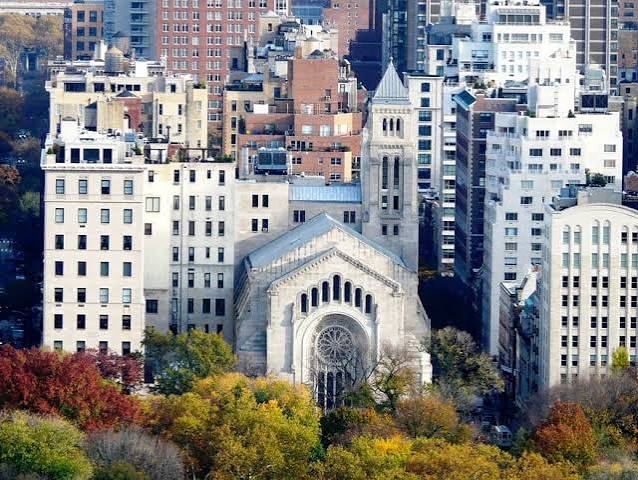
Temple Emanu-El at Fifth Avenue and East 65th Street in Manhattan, one of New York City's most significant religious and architectural landmarks.
1. A Landmark on Fifth Avenue
Congregation Emanu-El has been part of New York's history since the nineteenth century. Its present home at Fifth Avenue and East 65th Street was constructed in the late 1920s and completed in 1929, creating one of Manhattan's most recognizable houses of worship.
Designed on a monumental scale, the building combines powerful architectural forms with extraordinary craftsmanship. Natural stone, decorative mosaics, metalwork, stained glass, richly finished surfaces and intricate ornamentation create an interior in which materials are an essential part of the architecture.
Working inside a building of this importance requires a restoration philosophy that goes beyond simply improving appearance. Every phase must respect the surrounding historic materials and preserve the architectural character that has defined the building for generations.
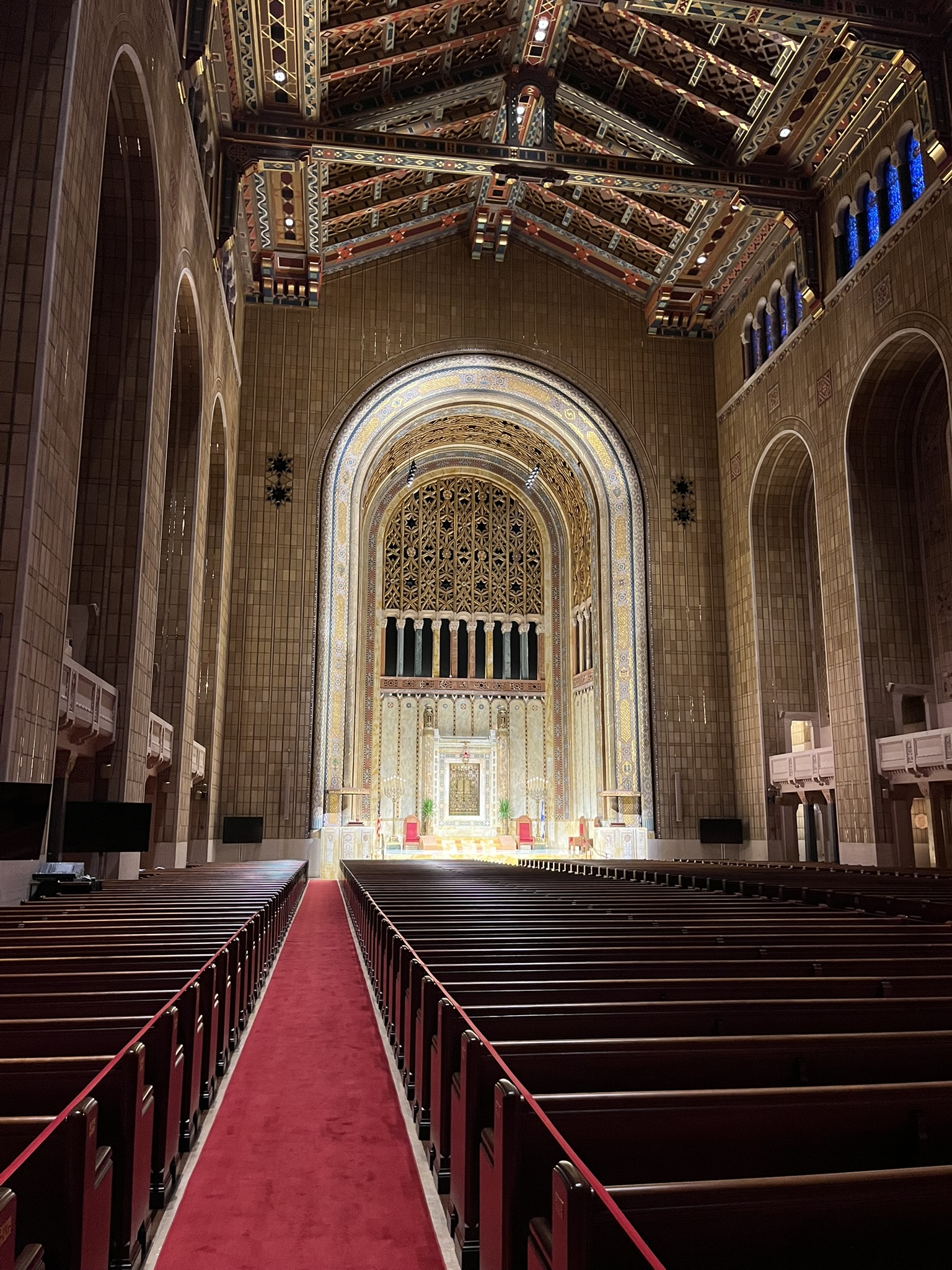
The monumental Main Sanctuary of Temple Emanu-El, where natural stone, mosaic, metalwork, wood and architectural ornament come together on an extraordinary scale.
2. Natural Stone as Part of the Architecture
Natural stone is an essential part of Temple Emanu-El's architectural identity. Throughout the interior, different colors, patterns, textures and finishes help define ceremonial spaces, corridors, stairways and transitional areas.
Historic stone installations present a very different restoration challenge from modern flooring. Decades of foot traffic, previous maintenance procedures, scratches, surface wear, localized damage and earlier repairs can gradually alter the appearance of the material.
The objective of a preservation-focused restoration is therefore not simply to make old stone appear new. It is to restore clarity, consistency and finish while respecting the visual character and age of the original material.
Historic Restoration Requires a Different Approach
In a historic property, successful stone restoration must balance cleaning, repair and refinishing with preservation. Each surface is evaluated individually so that the restoration improves its condition without unnecessarily removing or altering original material.
3. Understanding the Existing Condition
Before restoration begins, the stone must be carefully evaluated. High-traffic historic floors can contain scratches, worn areas, staining, small holes, pits, chips, previous repairs and significant differences in surface finish.
Some of these conditions become visible only at close range. Identifying them allows the restoration process to be adapted to the needs of the individual surface instead of applying one aggressive treatment throughout the entire installation.
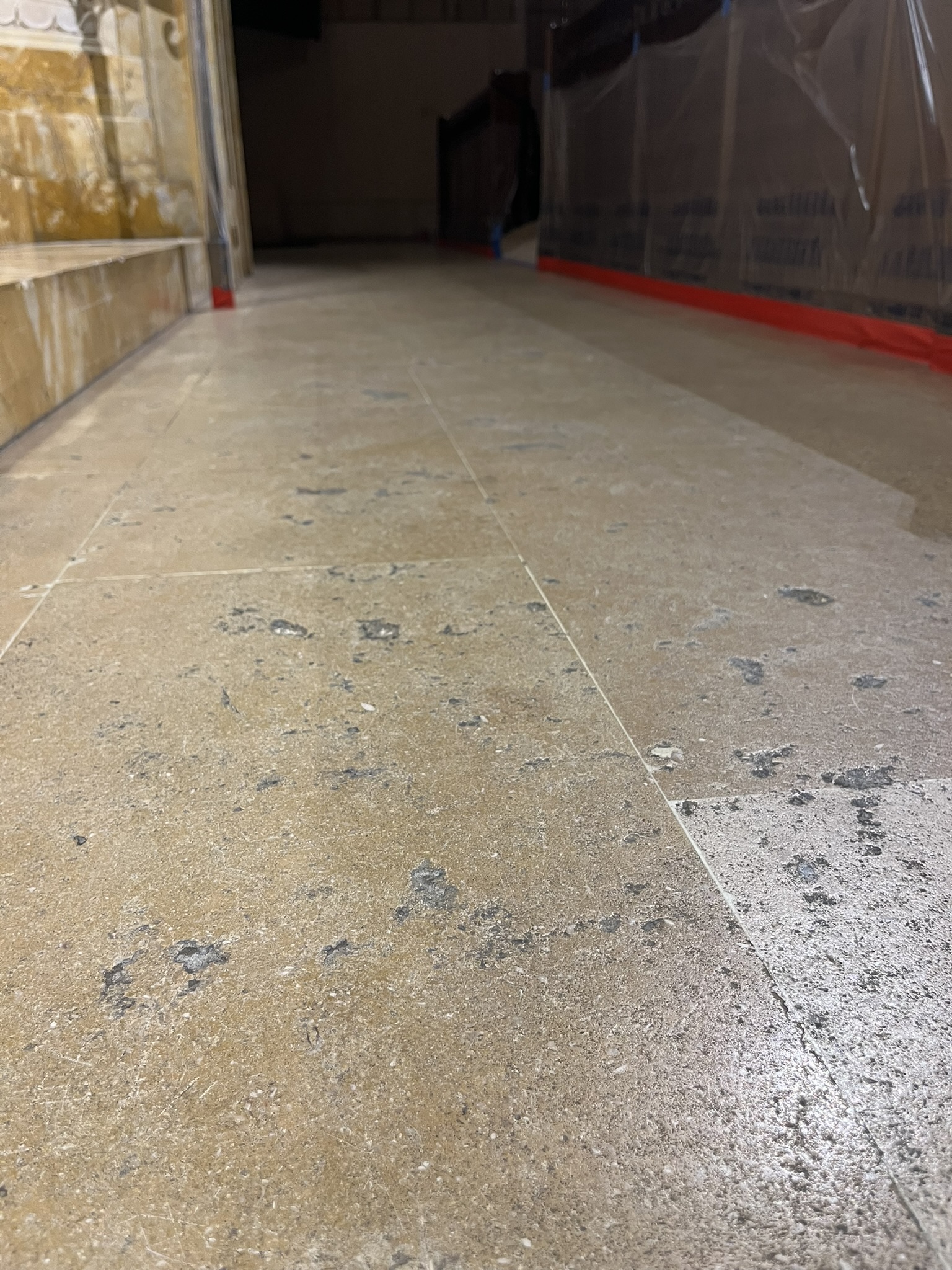
A close view of the existing historic stone surface reveals localized wear and imperfections that require detailed evaluation and treatment.
4. A Detailed Restoration Process
Historic stone restoration is rarely a single-step procedure. Individual areas may require different levels of attention depending on the type of stone, existing finish, amount of wear and condition of previous repairs.
The challenge is not merely to correct individual defects. Once the work is complete, localized repairs and refinished areas must integrate visually with the surrounding original stone so that the architecture can once again be experienced as a unified composition.
1. Condition Assessment
Existing wear, previous repairs, surface inconsistencies and damaged areas are reviewed before the restoration sequence is established.
2. Localized Stone Repair
Individual imperfections are addressed according to their condition, with careful attention to the surrounding historic material.
3. Surface Refinement
The stone surface is progressively refined to improve consistency, clarity and overall appearance while maintaining the character of the original installation.
4. Final Detailing
Edges, transitions and areas surrounding sensitive architectural elements require detailed finishing so that the completed work integrates naturally throughout the space.
5. Protecting Historic Architectural Elements
Restoration inside Temple Emanu-El requires careful protection of much more than the stone itself.
Decorative metalwork, bronze, woodwork, doors, wall finishes and other adjacent architectural components must remain protected throughout the different phases of work. Proper masking and containment allow technicians to perform detailed restoration while minimizing risk to surrounding finishes.
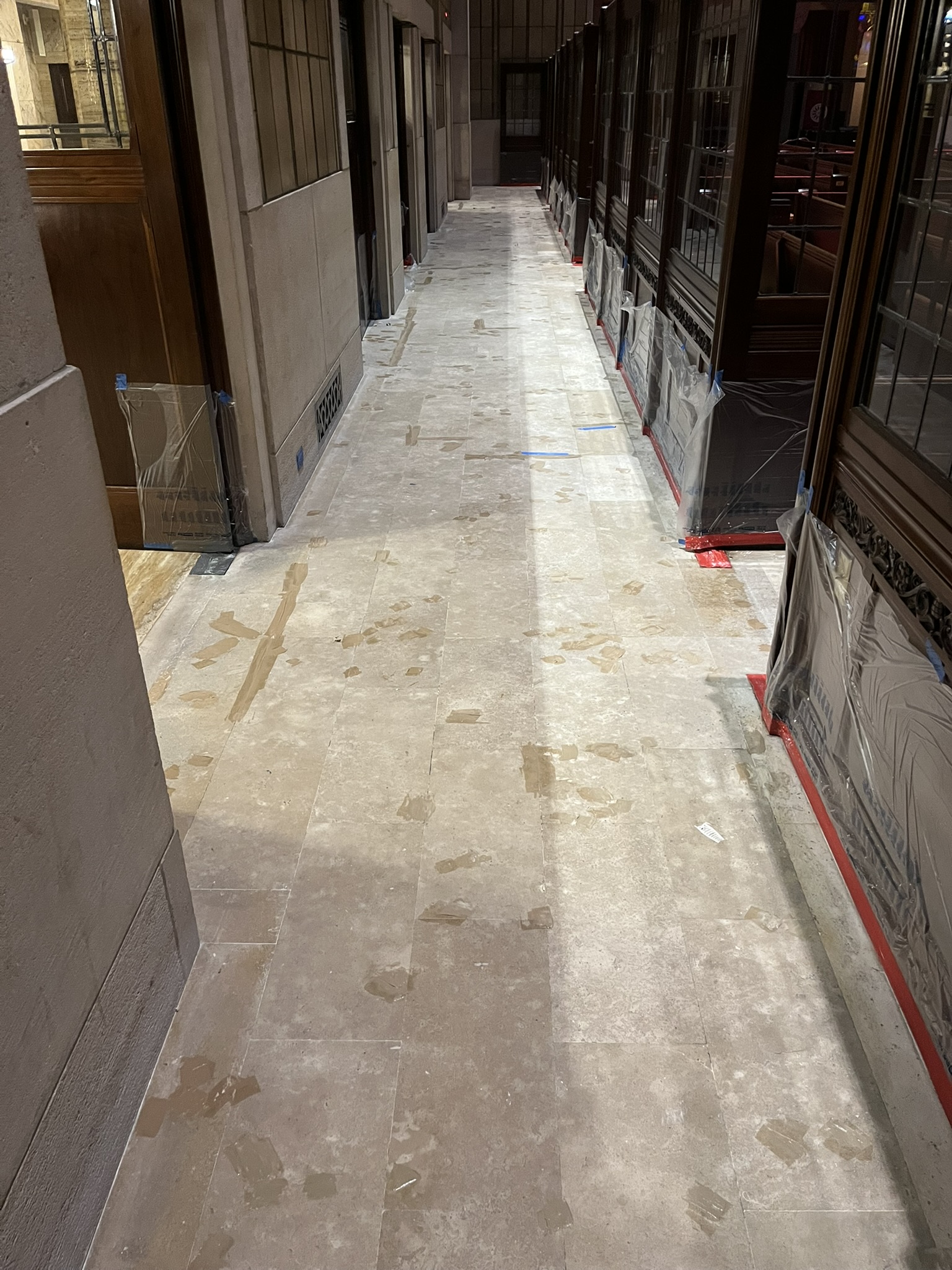
Protection and containment around adjacent architectural elements allow stone restoration to be performed within the historic interior with precision and control.
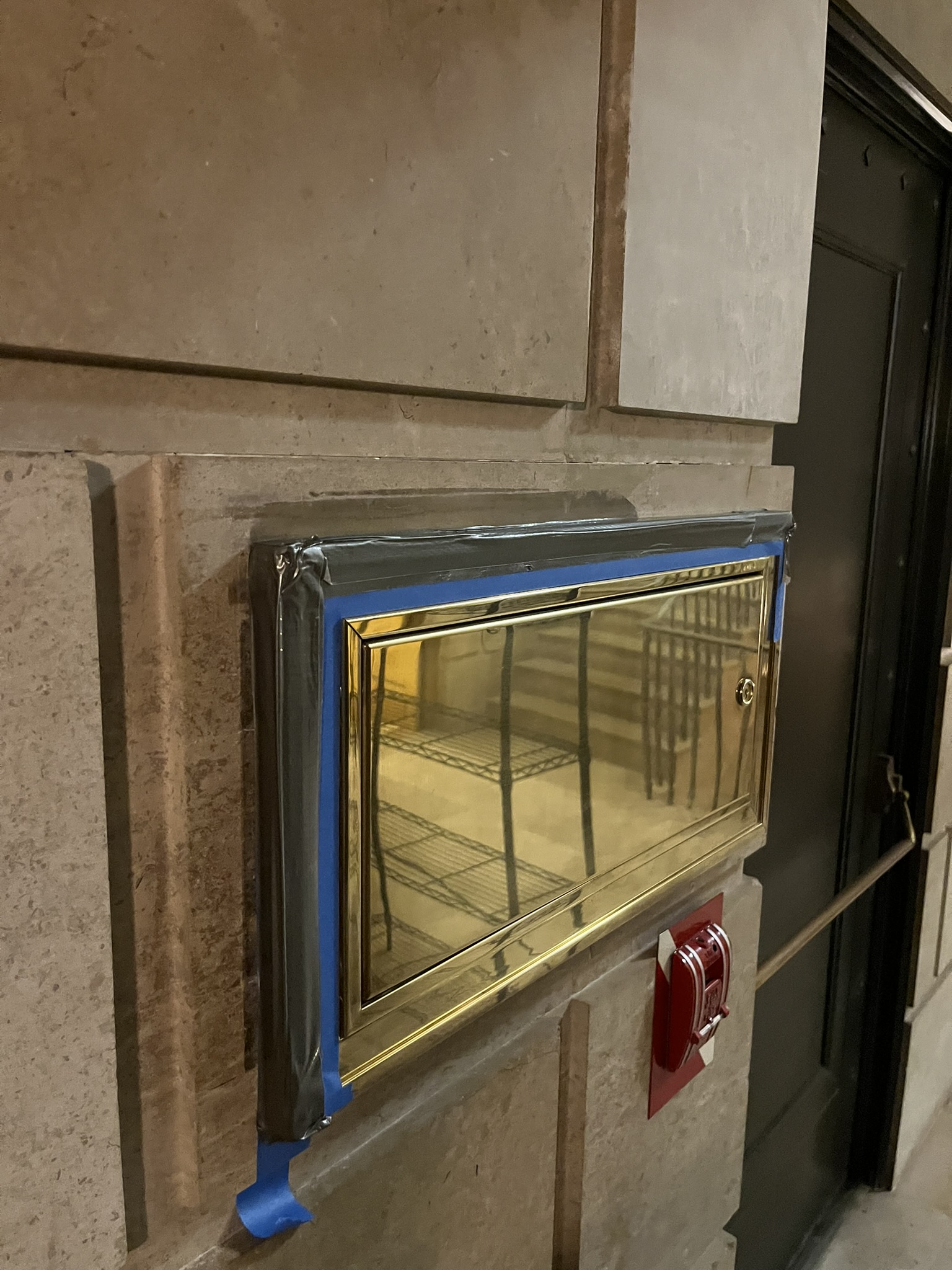
Decorative metal and surrounding historic finishes are carefully masked and protected while nearby stone surfaces are being restored.
Preservation Is in the Details
Historic stone restoration is as much about what is protected as what is restored. Working around original architectural materials requires patience, controlled procedures and careful attention to every transition between surfaces.
6. Restoring Depth, Clarity and Character
As natural stone experiences decades of traffic and maintenance, its visual depth can gradually diminish. Scratches, uneven wear and deterioration scatter light differently across the surface, causing portions of the floor to appear flat, cloudy or inconsistent.
Through a controlled professional restoration process, the surface can be progressively refined to create a more consistent finish while bringing back the natural movement, variation and depth of the stone.
The result is not simply a shinier floor. Proper restoration allows the characteristics of the stone itself to become visible again and contribute naturally to the surrounding architecture.
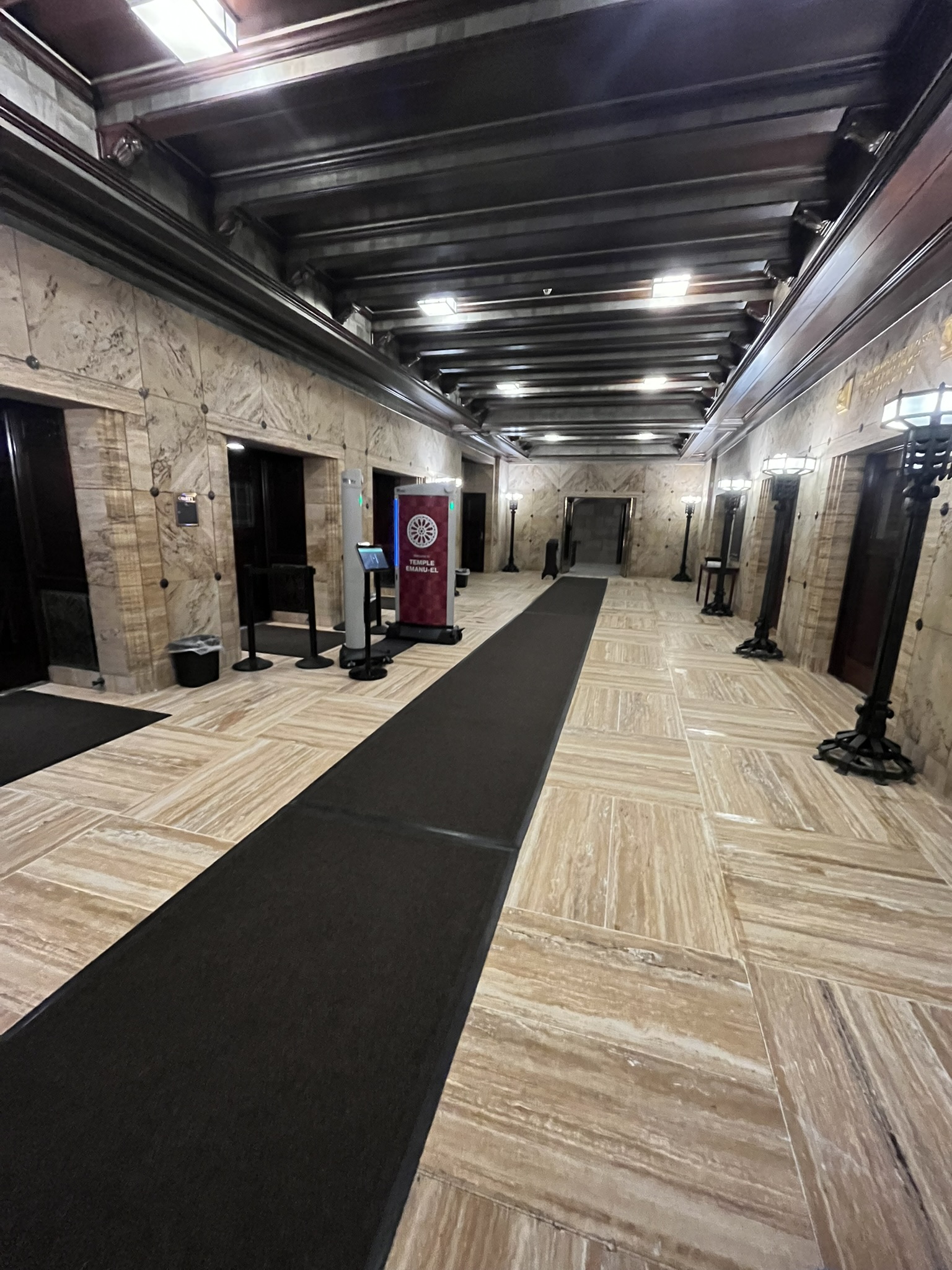 During Restoration
Historic stone flooring during the restoration process, before the final surface refinement and detailing stages.
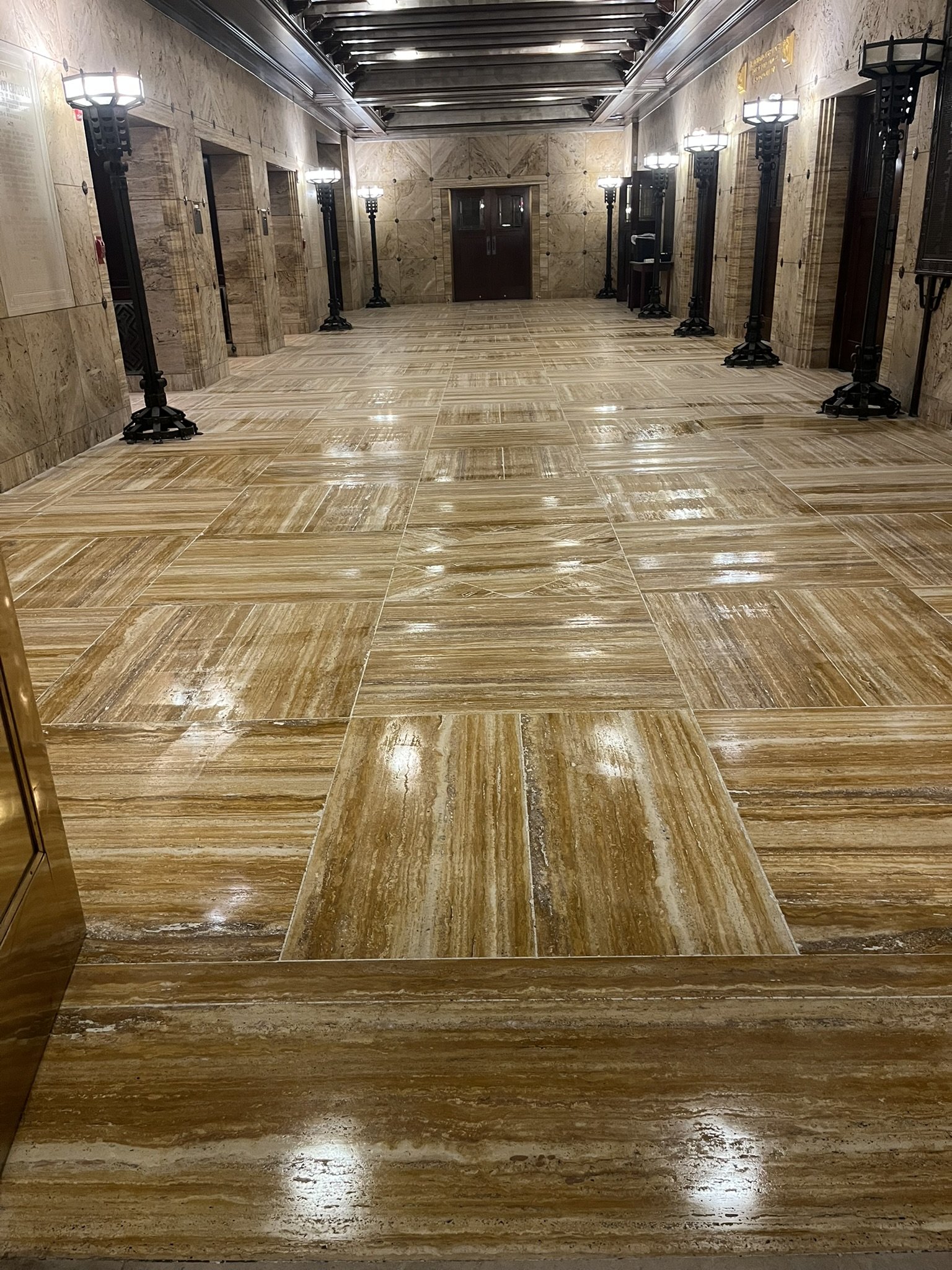 Restored Finish
The restored surface reveals greater clarity, depth and definition throughout the natural pattern of the stone.
7. Working Within the Sanctuary
Few environments demonstrate the importance of precision more clearly than the sanctuary at Temple Emanu-El.
Stone surfaces exist immediately alongside historic railings, ceremonial areas, decorative architectural elements, walls and highly detailed finishes. The restoration must therefore be carefully coordinated within the existing architecture rather than approached as an isolated flooring project.
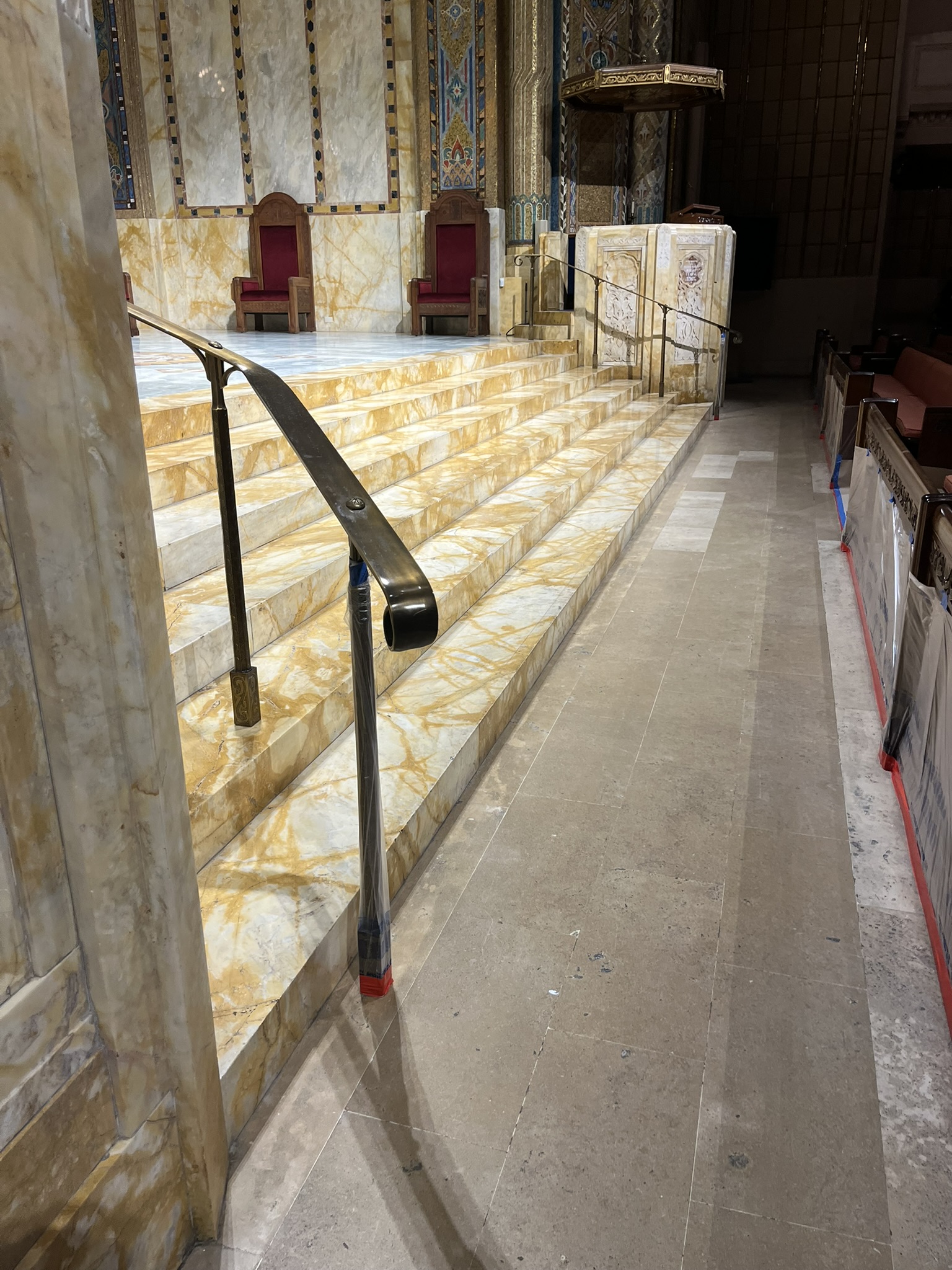
Stone restoration within the sanctuary requires precise work immediately alongside historic railings and highly detailed architectural finishes.
8. Preserving Nearly a Century of Craftsmanship
The architects, stone setters, craftsmen and artists who created Temple Emanu-El nearly a century ago produced an interior intended to endure for generations.
Today's restoration work becomes another chapter in that history.
For our team at Statewide Stone Care, participating in the restoration of Temple Emanu-El represents more than another natural stone project. It is an opportunity to apply specialized stone-care knowledge within one of New York City's most extraordinary architectural environments.
From detailed localized treatment to the restoration of expansive historic floor areas, every phase requires patience, precision and respect for the original material.
Preserving New York's Architectural Legacy
Statewide Stone Care provides specialized natural stone restoration for historic, institutional, commercial and high-end properties throughout New York, New Jersey and Connecticut.
From marble and limestone restoration to detailed repair, refinishing and long-term stone maintenance, our team develops solutions around the unique requirements of each property.
Discuss Your Restoration Project