
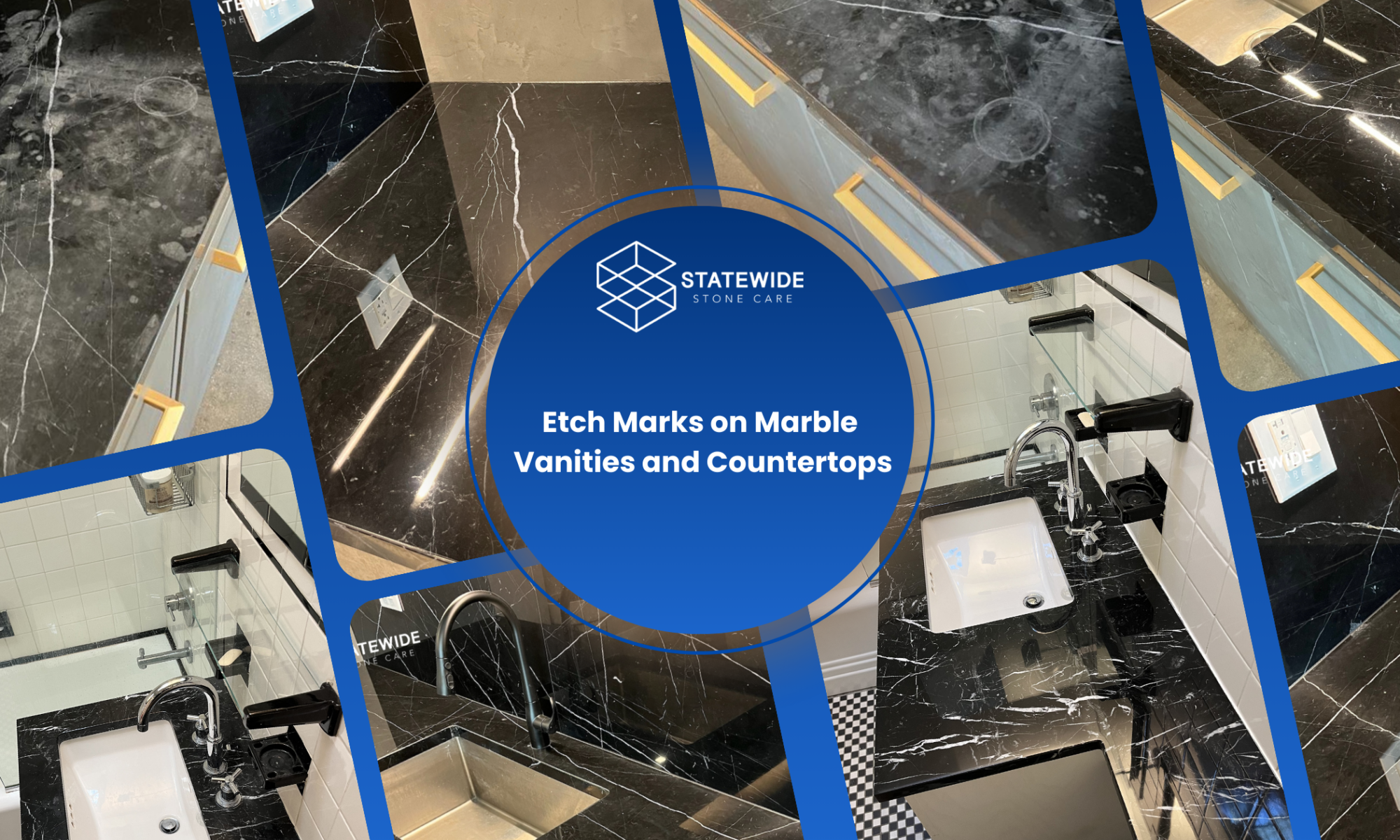
Learn how to remove etch marks from marble countertops in NJ, what causes marble etching, and when to call a professional marble restoration company.
Marble countertops bring timeless beauty to New Jersey homes, but they are also one of the most sensitive natural stone surfaces when it comes to acid damage. If you have noticed dull spots, cloudy rings, or light marks on your marble, there is a good chance you are dealing with etching, not staining.
At Statewide Stone Care, we help homeowners across New Jersey restore marble countertops that have lost their finish due to everyday use, acidic spills, and improper cleaning methods.
What Are Etch Marks on Marble?
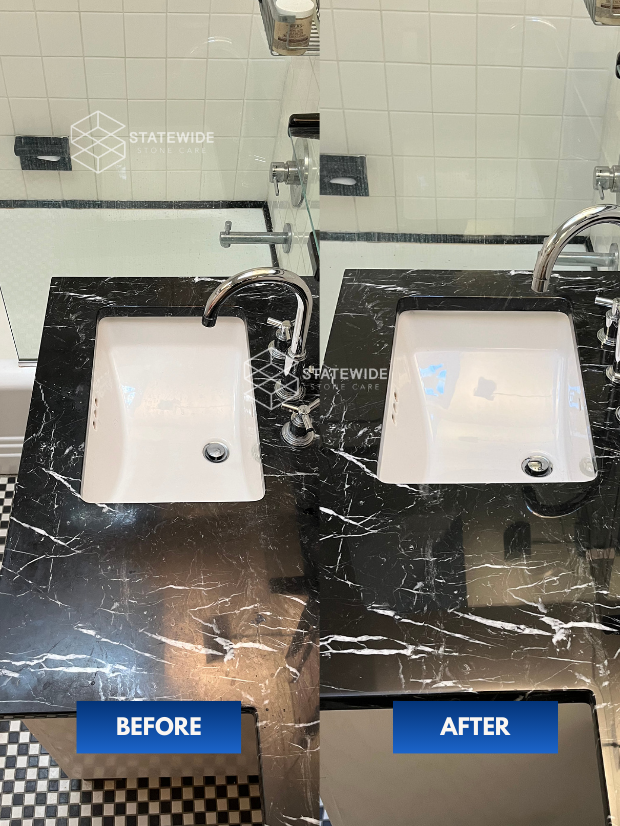
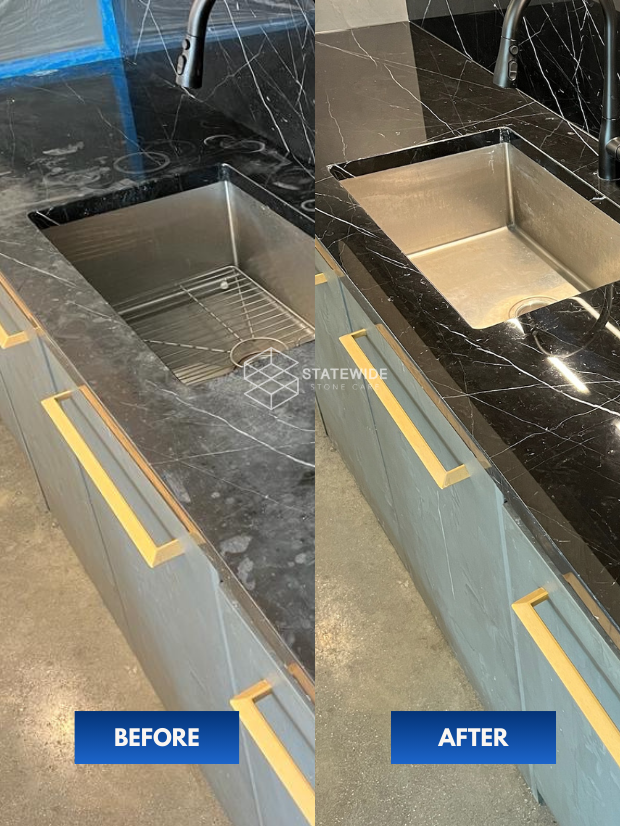
Etch marks are areas where the marble surface has been chemically altered by acid. Unlike a stain, which penetrates the stone and changes its color, an etch affects the finish itself. That is why etch marks often look lighter, duller, or feel slightly rough compared to the surrounding polished surface.
Common causes of marble etching include:
-
Lemon juice
-
Vinegar
-
Wine
-
Coffee
-
Tomato sauce
-
Bathroom and kitchen cleaners with acidic ingredients
How to Tell If It Is Etching or a Stain
Many homeowners assume every mark on marble is a stain, but etching and staining are different problems.
A stain usually darkens or discolors the stone.
An etch usually looks dull, cloudy, or lighter than the surrounding finish.
If the spot seems to sit “in” the shine rather than change the stone’s color, it is most likely etching.
What Not to Do
Before trying to fix etched marble, avoid these common mistakes:
-
Do not use vinegar, bleach, or acidic cleaners
-
Do not scrub with abrasive pads
-
Do not use random polish products made for other surfaces
-
Do not spot-polish a large visible area without knowing the finish level
These mistakes can enlarge the damaged area or leave the countertop with an uneven appearance.
The Professional Way to Remove Etch Marks from Marble Countertops
Professional marble restoration is the safest and most effective way to remove etch marks while preserving the beauty of the stone. Depending on the severity of the damage, the process may include:
1. Surface evaluation
The technician identifies whether the issue is etching, staining, wear, or a combination of problems.
2. Honing or polishing
Light to moderate etching can often be corrected by refining the surface and restoring the finish.
3. Blending the repaired area
This is one of the most important steps. Rather than leaving a visible repaired patch, the finish is blended into the surrounding countertop for a uniform result.
4. Protection
Once restored, the surface can be sealed or protected with advanced solutions designed to help reduce future etching and staining.
Remove Stains & Etching from Natural Stone
Want to see real stain and etch removal results?
Visit our Instagram to explore before and after projects, restoration footage, and real natural stone surfaces brought back to life.
👉 Follow us on Instagram:
@statewidestonecare
